
Phonics at Sherburn Hungate Primary School
The Department for Education strongly recommend the use of synthetic phonics when teaching early literacy skills to children. Synthetic phonics is simply the ability to convert a letter or letter group into sounds that are then blended together into a word.
Phonics at Our School
At our school, we use the Little Wandle Letters and Sounds Revised programme to teach phonics. This is a carefully structured, systematic approach that helps children develop the knowledge and skills they need to become confident readers and writers.
Phonics teaches children the relationship between sounds (phonemes) and the letters or groups of letters (graphemes) that represent them. Through daily, engaging lessons, children learn to recognise, pronounce and blend sounds to read words, as well as segment words to support their spelling.
A carefully structured approach
Our phonics teaching begins in Reception and follows a clear progression through the school. Children learn new sounds and corresponding graphemes in a carefully planned sequence, while regularly revisiting previously taught knowledge. This repetition and practice helps children develop fluency and confidence.
Children have regular opportunities to:
- Learn and practise new sounds and graphemes.
- Blend sounds together to read words.
- Segment words to support spelling and writing.
- Read words containing the sounds they have been taught.
- Develop their recognition of common tricky words.
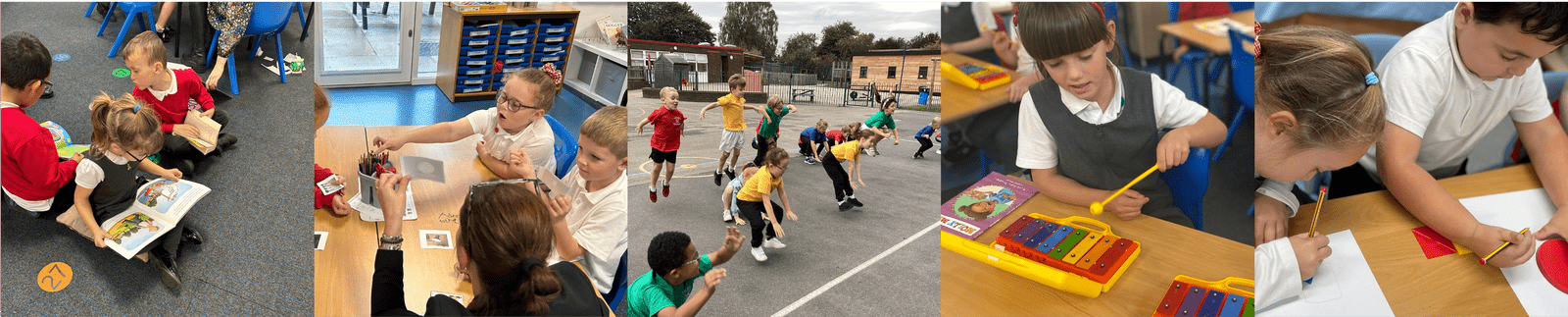
- Apply their phonics knowledge when reading sentences and books.
Reading books matched to phonics learning
An important part of the Little Wandle approach is that children read books that are carefully matched to the phonics they have been taught. This means that children can use their developing phonics knowledge successfully rather than relying on guessing words from pictures or context.
Children practise the same book several times during the week, developing accuracy, fluency and expression. This repeated reading helps children experience success and develop a love of reading.
Supporting your child at home
Parents and carers play an important role in supporting children's phonics development. We encourage you to practise the sounds and words your child is learning and to read regularly together at home.
When reading unfamiliar words, encourage your child to sound out and blend rather than guessing. Most importantly, share books, talk about stories and enjoy reading together. Developing a love of books and reading is just as important as learning to decode words.
Every child can learn to read
We recognise that children learn at different rates. Children who need additional support receive targeted opportunities to revisit and practise the knowledge they need, helping them to keep up with the programme and become successful, confident readers.
Our aim is for every child to leave the early years and Key Stage 1 with secure phonics knowledge, the confidence to tackle unfamiliar words and, above all, a love of reading that will support them throughout their education and beyond.
